


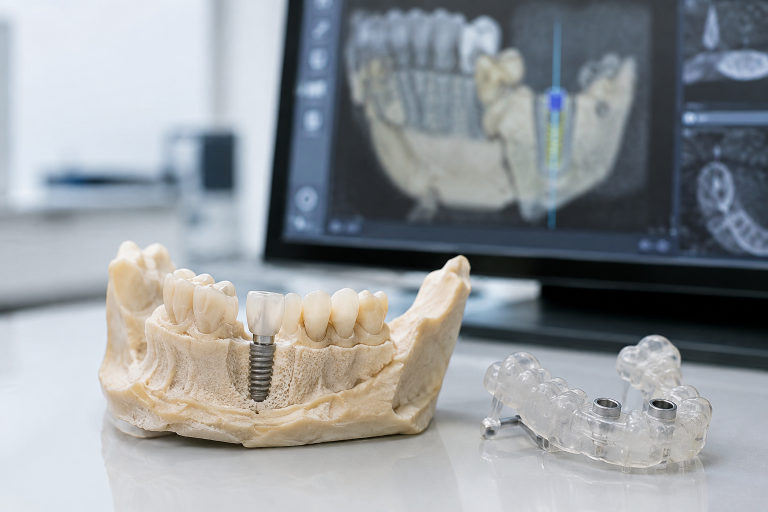
Dental implants can replace missing teeth, but the result depends on much more than placing an implant in the jaw. Today, digital dental implant technology can help dentists collect, organize, and review information before treatment begins. The goal is to create a plan that supports a comfortable bite, natural-looking tooth position, healthy gums, and practical long-term cleaning.
Digital tools can make the planning process easier to visualize, but they do not replace a careful examination or professional judgment. Every patient has different bone anatomy, oral health needs, medical considerations, expectations, and financial priorities. The best implant plan is individualized rather than based solely on the newest equipment.
What Digital Implant Planning Means
Digital implant planning is the use of electronic records and software to study a patient’s mouth before implant treatment. These records may include photographs, digital mouth scans, X-rays, three-dimensional images, and bite information. Together, they can help the dental team evaluate teeth, bone, gums, available space, and the proposed replacement tooth.
It is useful to distinguish the stages of a digital workflow. A digital consultation may involve photographs or scans. Digital planning involves reviewing those records to consider treatment options. Guided surgery uses a custom guide or navigation system to help transfer a plan into the mouth. A digitally designed restoration is the crown, bridge, or denture created with computer-aided design tools.
Modern implant care often connects imaging, virtual planning, guided placement, and computer-aided restoration design, and the basic dental implant concept still underlies each step.
Why Planning Matters Before Treatment
An implant is not simply placed where a tooth used to be. Its position should support the final restoration while respecting the available bone and nearby anatomy. Planning may include reviewing bone height and width, neighboring tooth roots, nerves, sinus spaces, gum shape, tooth spacing, and chewing forces.
A detailed review can also identify issues that may affect the sequence of care. For example, a tooth may need to be removed first, bone support may be considered, or gum treatment may be needed before implant placement. Discussing these possibilities early can help patients understand the expected timeline and avoid treating a proposed plan as a guarantee.
Digital Tools Used in Implant Care
Three-Dimensional Imaging
Three-dimensional imaging, often called cone-beam computed tomography (CBCT), can show the jaw from multiple angles. When clinically appropriate, it may help the dentist evaluate bone volume and the location of structures that need to be avoided. Imaging should be selected for a clear clinical reason, not simply because it is available.
Intraoral Scanning
An intraoral scanner creates a digital surface record of the teeth and gums. Some patients find scanning more comfortable than traditional impression material. The resulting file can also be shared with a dental laboratory or other members of the treatment team when a crown, bridge, or implant-supported denture is being planned.
Computer-Aided Design, Guides, and Navigation
Software can help design the replacement tooth before the implant position is finalized. This restoration-first approach can help the team consider appearance, bite, and access for home care. A surgical guide may then be made to help direct the planned position during surgery. Dynamic navigation provides real-time visual guidance, but neither method makes treatment risk-free or removes the need for clinical skill.
Artificial Intelligence
Artificial intelligence may assist with image review, measurements, and pattern recognition. It should remain a support tool. A qualified clinician still needs to verify records, interpret the patient’s health situation, explain options, and make the final treatment decisions.
What to Expect at a Digital Planning Visit
- Health review: The team discusses medical history, medications, oral health, and treatment goals.
- Clinical examination: The dentist evaluates teeth, gums, bite, jaw function, and the area of tooth loss.
- Digital records: Photographs, scans, or three-dimensional imaging may be collected when needed.
- Virtual review: The records are studied to compare implant positions and restoration options.
- Treatment discussion: The patient reviews risks, timing, costs, maintenance, and possible additional procedures.
- Consent and scheduling: Treatment proceeds only after the patient understands and accepts the proposed plan.
Consider a person replacing one missing back tooth. The team may assess the height and width of bone, the roots of adjacent teeth, the pressure from the opposing tooth, and whether the final crown can be cleaned easily. Those details may influence whether an implant is appropriate and how the restoration should be shaped.
Benefits and Limits of Dental Technology
Possible Benefits
- Clearer visualization of anatomy and proposed tooth positions
- More organized communication among the dentist, specialist, and laboratory
- Visual records that can make treatment discussions easier to understand
- Support for planning bite, appearance, and cleaning access
- Digital records that may be useful during future maintenance visits
Important Limits
- Technology cannot guarantee healing or a successful long-term result.
- Incomplete scans, inaccurate records, or poor data matching can affect a plan.
- Not every patient needs every scan, guide, or digital workflow.
- Equipment and laboratory steps can add cost in some cases.
- Oral hygiene, smoking, medical conditions, bite forces, and follow-up care still matter.
The right plan is not automatically the most high-tech plan. A useful tool should answer a real clinical question, improve communication, or solve a meaningful treatment need.
Questions to Ask Before Choosing Implant Treatment
- What problem will this technology help solve in my case?
- Which scans or records are needed, and why?
- Who will review and approve the digital treatment plan?
- How will the final tooth be designed for chewing and cleaning?
- Could bone grafting, tooth removal, or gum treatment be needed?
- What happens if the plan changes during treatment?
- What healing stages and follow-up visits should I expect?
- Which costs are included, and which services may be separate?
- How should the implant and restoration be maintained over time?
What May Come Next in 2026 and Beyond
Digital records are likely to become more integrated, combining imaging, scans, photographs, and bite information into a single planning environment. AI-assisted tools may continue to help with repetitive tasks, while chairside manufacturing may expand options for selected restorations. These developments still require privacy protections, staff training, reliable data, and strong clinical oversight. Educational discussions about digital tools, AI, and implant training continue within dental school programs.
Final Thoughts
Digital planning can make implant treatment more detailed, coordinated, and understandable. However, successful care still depends on diagnosis, clinician skill, patient health, thoughtful restoration design, and consistent maintenance. Patients should look for clear explanations and a plan that makes medical, functional, and practical sense for their individual needs.
