


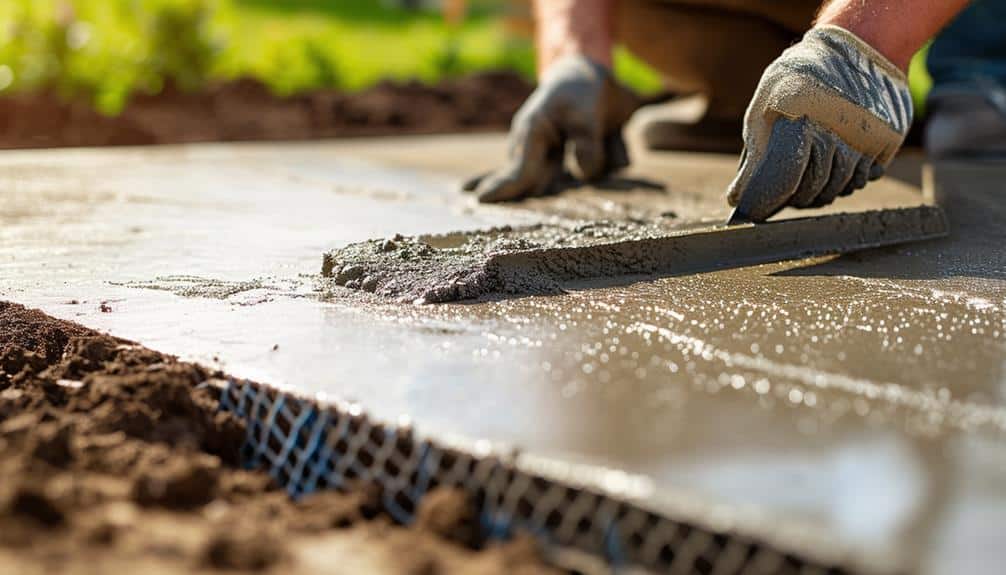
Stable soil gives a concrete sidewalk consistent support beneath each slab. Water, erosion, and changing ground conditions can alter the support, producing uneven sections. Raising a concrete sidewalk addresses settled slabs, but the condition of the underlying soil remains closely tied to long-term alignment. Here is some information about the role of soil stability in effective concrete sidewalk raising:
Understanding Concrete Support
Concrete support depends on how evenly the underlying ground carries the slab. Dense soil provides a different base than areas affected by erosion or changing moisture levels. Differences beneath adjacent sections can develop over time, and these variations contribute to uneven elevation. Some factors that indicate how the ground supports a sidewalk include:
- Soil density: Compact ground provides a more consistent base beneath the slab.
- Ground contact: Continuous contact reduces unsupported areas beneath concrete.
- Load distribution: Pedestrian loads transfer through the slab into the supporting soil.
- Moisture changes: Wet and dry conditions can alter soil behavior beneath sidewalks.
- Settlement areas: Uneven sections help identify locations requiring closer evaluation.
Identifying Soil Movement
Soil movement can alter the support beneath a concrete sidewalk, causing individual slabs to settle unevenly. Water entry affects soil stability by changing how moisture moves around and beneath concrete. Runoff directed toward sidewalk edges often enters cracks or joints and reaches the supporting soil. Repeated exposure may gradually displace fine particles from beneath settled sections. As the supporting soil shifts, the concrete loses uniform support and begins to settle or sink in the affected areas. Directing water away from concrete helps limit one factor that changes ground conditions.
Underground voids form when the soil pulls away from the bottom of a concrete slab. Erosion and settlement can create gaps between the sidewalk and the underlying soil, and the void’s location influences which part of the slab loses support. A subsurface evaluation gives concrete experts information a surface inspection doesn’t provide.
Examining the location and pattern of uneven sections helps identify where ground movement may be occurring. A single lowered slab often indicates movement in a localized area beneath the sidewalk, while several affected sections point to broader ground changes. Comparing the elevation of adjacent slabs provides useful information about how settlement has developed across the walkway.
Restoring Concrete Support
Concrete raising restores lost support by filling voids beneath a settled sidewalk, and it lifts the slab back toward its intended elevation. Professionals drill small access holes through the concrete and pump a limestone slurry beneath the affected area. This material fills the open spaces between the slab and supporting soil. As the slab regains contact with the material below, it can be raised to alignment with adjacent sections. Restoring this contact helps evenly distribute loads across the supported area rather than leaving portions of the slab suspended over empty space. This helps prevent continued crack formation.
Maintaining Protective Joints
Joints between adjacent sidewalk slabs allow movement between concrete sections. Open seams also allow surface water to infiltrate the subsurface. Concrete caulking seals areas where moisture and runoff could enter the structure, helping prevent water intrusion. After concrete sidewalk raising, this type of maintenance helps address potential sources of water intrusion, including:
- Joint openings: Apply caulking where joints have separated, or the existing seal has deteriorated.
- Crack paths: Seal cracks that could allow water to reach the supporting soil.
- Water flow: Keep runoff from collecting around joints, cracks, or slab edges.
- Settled areas: Check previously raised sections for changes that may require additional maintenance.
Learn More About Concrete Sidewalk Raising
Long-term sidewalk maintenance involves examining more than the visible height difference between concrete sections. Drainage patterns and joint conditions provide additional information about the surrounding soil environment. Professionals evaluate how surface settlement relates to the conditions beneath and around each slab before raising a concrete sidewalk. Contact a concrete contractor today to learn more.
