


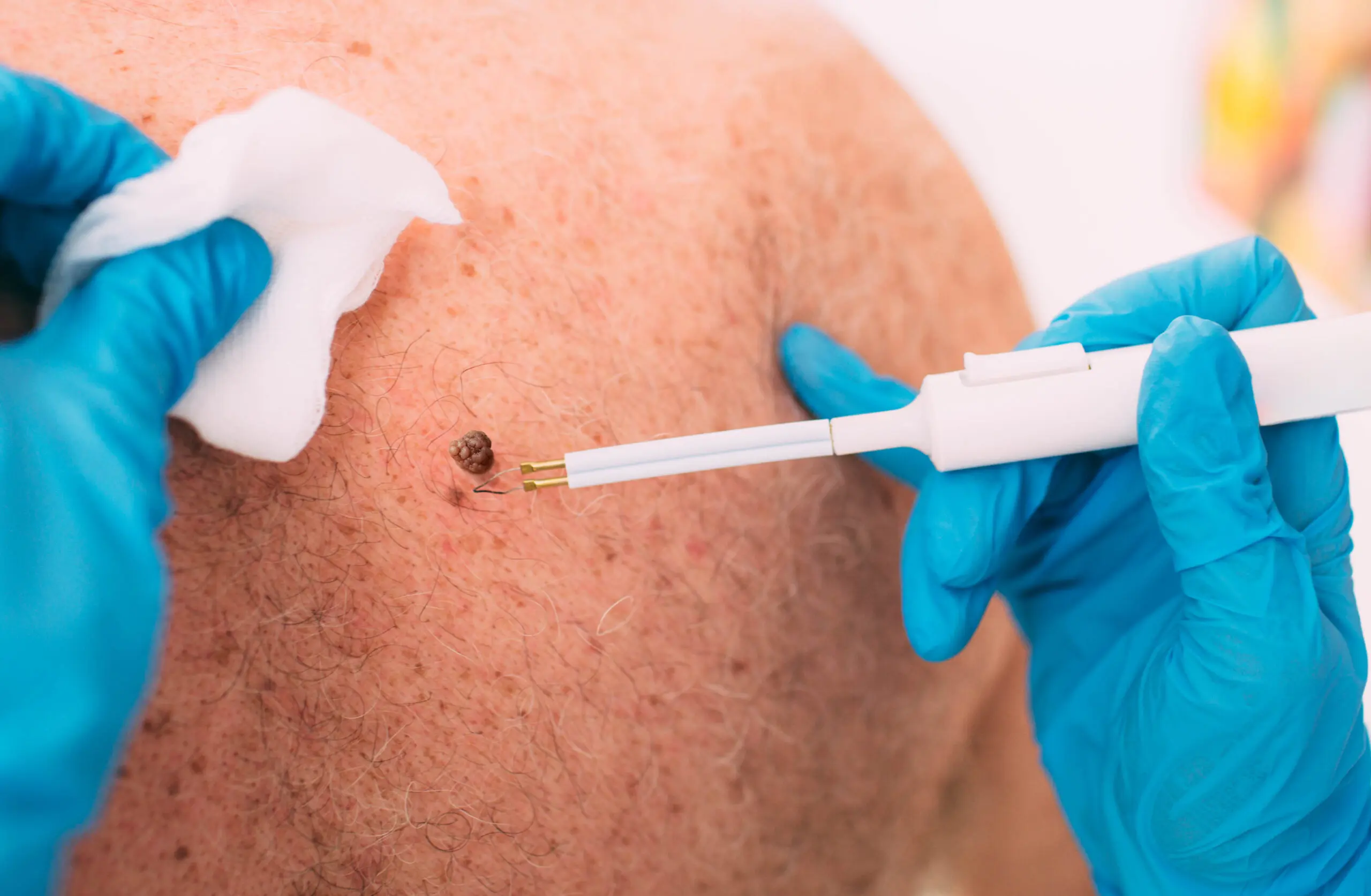
Skin tags are small, benign skin growths that connect to the skin through a narrow stalk. They are usually harmless and do not cause symptoms, but irritation can develop when they rub against clothing, jewelry, or other items. Professional skin tag removal provides an option for irritated growths or those that cause cosmetic concerns; medical evaluation can confirm whether a growth is actually a skin tag.
Recognizing Skin Tag Removal Needs
Skin tags are usually flesh-colored or brown, and their color, texture, size, and base can vary. They commonly develop on the neck, underarms, eyelids, under the breasts, and in the groin area, while friction between skin surfaces can play a role in their development. When multiple growths appear, a medical evaluation helps determine whether they are skin tags or another condition that looks similar.
Skin tags do not usually cause symptoms. Some become irritated when they repeatedly rub against clothing, jewelry, or other objects; people also seek removal because they dislike the appearance. A provider can evaluate the growth before treatment begins, which helps distinguish a skin tag from conditions such as moles, warts, seborrheic keratoses, or skin cancers.
Changes in a skin growth warrant professional evaluation. Some conditions resemble skin tags, but they require different care; a provider can determine whether the growth has the characteristics of a benign skin tag. In rare cases, multiple skin tags can also occur with an underlying hormonal or endocrine syndrome, so medical evaluation is recommended before treatment.
A removed growth can sometimes be submitted to a pathology laboratory. The examination helps rule out skin cancer when a provider determines that laboratory testing is appropriate; the need for this testing depends on the growth being evaluated. Professional assessment therefore provides information that visual inspection alone does not establish.
Reviewing Removal Methods
Skin tag removal involves several treatment methods. A provider can remove a growth with sterile surgical scissors, freeze it with liquid nitrogen, or use electrical burning, and larger growths with broad bases might require surgical excision. The selected method depends on factors such as the growth’s size and location.
Small skin tags usually can be removed without anesthesia. Larger growths might require local anesthesia, while an anesthetic cream might be used before treating multiple tags. Removal can cause minor bleeding or a local infection; freezing or burning can cause temporary skin discoloration.
Evaluating Sensitive Locations
The location of a skin tag affects how a provider approaches removal. Growths near an eyelid require particular attention, and an ophthalmologist might remove a tag located close to the eye. Other growths can develop in areas where repeated rubbing causes irritation, so location forms part of the evaluation. Skin tags can appear in several areas of the body. They commonly occur in body folds and other locations where skin rubs against skin or clothing, and some growths interfere with activities such as shaving. A provider evaluates the growth and its location, then determines whether removal is appropriate.
Schedule a Professional Evaluation
Professional evaluation helps confirm whether a growth is a skin tag. Removal offers an option when a tag becomes irritated or causes cosmetic concerns, and several removal methods are available based on the growth being treated. A qualified provider can assess the growth, discuss an appropriate removal method, and determine whether further examination is needed.
